OneKey Classic 1S Review: Open-Source Value From the East
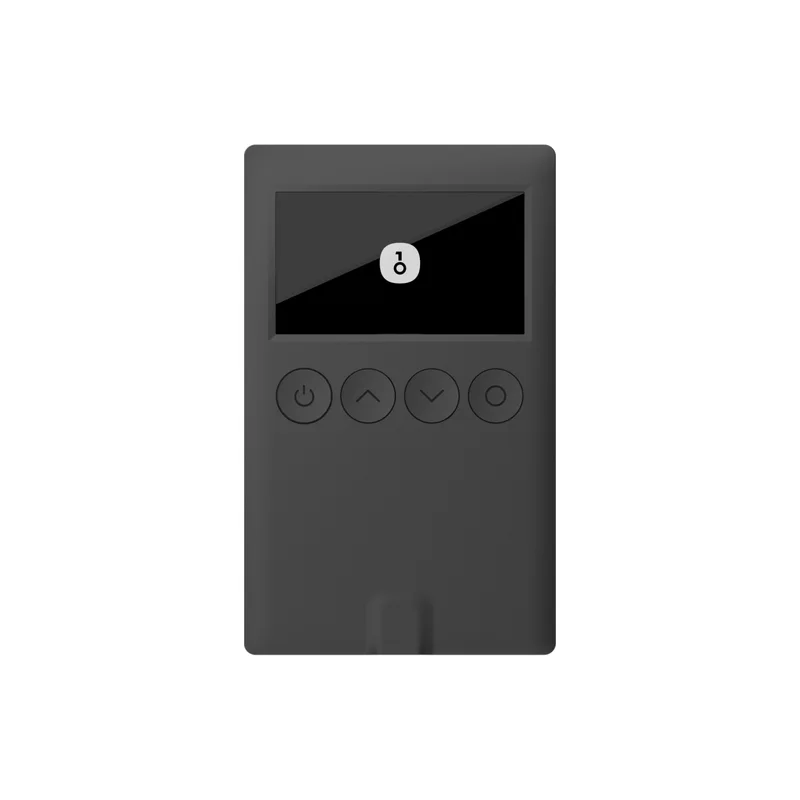
The OneKey Classic 1S pairs an EAL6+ secure element with fully open-source, reproducible firmware — a combination usually reserved for pricier devices — in a slim, battery-equipped body with Bluetooth for mobile use. At its new $99 price it faces stiffer competition from the Trezor Safe 3, which undercuts it with a longer track record, but the open-source purist who wants Bluetooth and broad chain support gets a lot here. Rare-transactor holders should also look at the battery-free Classic 1S Pure at $79.
Design and Build Quality
The OneKey Classic 1S is a slim, minimalist device closer to a thick credit card than a USB stick, with a 1.54-inch high-contrast monochrome OLED and physical-button navigation. The screen uses an anti-glare polarizer and is easy to read, though its 128x64 resolution means verifying a long address takes more scrolling than on a touchscreen device. A built-in 530mAh battery lets the device run untethered, and connectivity covers both USB-C and Bluetooth — the latter still uncommon at this price. Build quality is clean and functional; this is a device designed to disappear into a pocket or drawer, not to impress on a desk.
Security
The Classic 1S features an EAL6+ certified secure element, matching the certification level of the more expensive Trezor Safe 5. Firmware and companion apps are fully open source with reproducible builds on GitHub, audited by SlowMist — transparency in the same category as Trezor, Blockstream, and BitBox02. Tamper-evident packaging and firmware attestation at first activation protect the supply chain, PIN protection wipes the device after repeated failed attempts, and intrusion detection triggers an auto-wipe. The fair caveat remains audit depth: OneKey has attracted fewer independent Western security reviews than Trezor or Ledger, which matters to users who weigh long adversarial track records heavily.
Software and Usability
The OneKey App spans desktop, mobile, and a browser extension, with clear-signing previews that show every method, allowance, and amount before you confirm on-device, plus the SignGuard engine flagging malicious contracts and phishing attempts in real time. Setup is fully offline and takes well under ten minutes. Bluetooth pairing makes mobile use genuinely convenient compared with USB-only rivals like the Trezor Safe 3 or KeepKey. Third-party compatibility has matured considerably and now includes MetaMask, OKX, Rabby, and Sparrow — the last being particularly relevant for serious Bitcoin users.
Coin Support and Ecosystem
The Classic 1S supports over 30,000 coins and tokens across 100+ chains, including Bitcoin, Ethereum, Solana, XRP, and the long tail of EVM networks, with NFT and WalletConnect v2 support out of the box. The OneKey lineup now brackets it on both sides: the battery-free Classic 1S Pure at $79 for cold-storage-first holders (also available in a Bitcoin-only edition), and the flagship OneKey Pro at $278 with a touchscreen, air-gapped QR signing, and a fingerprint reader. The company is backed by YZi (formerly Binance Labs) and Coinbase Ventures while remaining independent — reassuring for longevity, though self-custody purists who prefer distance from exchange capital should weigh that alignment.
Value Proposition and Competition
At $99, the Classic 1S is no longer the runaway bargain it was at launch, and the comparison math has shifted. The Trezor Safe 3 at $79 offers the same EAL6+ certification and a longer security track record, though without Bluetooth or a battery. The Blockstream Jade Plus at $65 remains the Bitcoin-purist pick. What keeps the Classic 1S competitive is its specific combination: fully open-source code, secure element, Bluetooth, battery, and enormous chain coverage in one slim device. If that exact mix matches your use — mobile-first, multi-chain, transparency-minded — it earns its price. If you mostly hold Bitcoin and transact rarely, OneKey’s own battery-free Pure at $79 is the smarter buy.
For
- ✓Fully open-source firmware and apps with reproducible builds
- ✓EAL6+ certified secure element
- ✓Bluetooth plus USB-C connectivity with built-in 530mAh battery
- ✓Slim, credit-card-adjacent form factor
- ✓Supports 30,000+ coins and tokens across 100+ chains
- ✓SlowMist-audited, with SignGuard real-time scam detection in the app
Against
- ✗Small 1.54" monochrome display means more scrolling to verify addresses
- ✗Price rose to $99 — no longer the bargain it launched at
- ✗Less established brand in Western markets than Trezor or Ledger
- ✗Backed by exchange-aligned investors (YZi/Binance Labs, Coinbase Ventures), a philosophical concern for some
Affiliate links · price unchanged for you
Claude
AI crypto agent — searches across the entire internet to analyze specifications, security data, and user feedback, delivering research results based on facts and data.