Keystone 3 Pro Review: The Air-Gapped Wallet With Triple Secure Elements
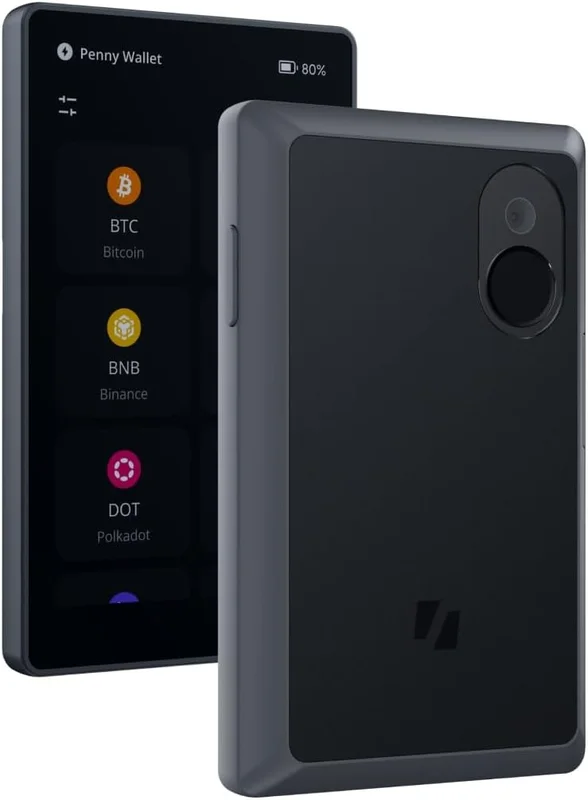
The Keystone 3 Pro is one of the most security-focused hardware wallets available in 2026. Its fully air-gapped design eliminates USB, Bluetooth, and WiFi attack vectors entirely, while triple Infineon secure elements and PCI-DSS certification provide hardware-level protection that few competitors match. The 4-inch touchscreen and fingerprint sensor make daily use comfortable despite the air-gapped workflow. At $149, it sits in competitive mid-range territory alongside the Trezor Safe 5 and BitBox02, though its appeal is strongest for security-conscious users who value the air-gapped approach above all else. Users who prefer a simpler USB-based workflow may find the QR code process less convenient for frequent transactions.
Design and Build Quality
The Keystone 3 Pro is noticeably larger than most hardware wallets, and that is by design. The 4-inch IPS touchscreen dominates the front of the device, providing a generous display area for verifying transaction details, scanning QR codes, and navigating menus. The screen resolution is sharp enough to display complex QR codes clearly, which is essential given that QR communication is the only way data enters or leaves the device.
The build quality is solid, with a clean industrial design and a fingerprint sensor integrated into the side of the device. At 73 grams, it is heavier than compact wallets like the Trezor Safe 5 (22.7g) or BitBox02 (12g), but the weight feels appropriate for the larger form factor. The device is powered by a removable AAA battery pack or USB-C for charging only — critically, the USB-C port carries power but no data, maintaining the air gap. This is a thoughtful design choice that lets you charge the device without compromising its security architecture.
Security Architecture
Security is the Keystone 3 Pro's headline feature, and it delivers on multiple fronts. The fully air-gapped design means the device has no USB data connection, no Bluetooth, no WiFi, and no NFC. All communication with your computer or phone happens through QR codes displayed on the device screen and scanned by the camera. This eliminates an entire category of remote attack vectors that affect USB-connected and wireless wallets.
The device uses three Infineon secure element chips, providing redundancy that is unique in the hardware wallet market. If one chip is compromised, the others maintain the integrity of your private keys. The Keystone 3 Pro is PCI-DSS certified, a standard typically associated with payment processing infrastructure, and includes an anti-tamper self-destruct mechanism that wipes the device if physical intrusion is detected. The firmware is open-source, allowing independent security researchers to audit the code.
Compared to the NGRAVE ZERO, which is also fully air-gapped with EAL7 certification at $398, the Keystone 3 Pro offers a similar security philosophy at a significantly lower price point. Against the Trezor Safe 5, which connects via USB-C, the Keystone trades convenience for the additional security of a complete air gap. The BitBox02 occupies similar price territory with Swiss engineering and open-source credentials, but uses USB-C for connectivity.
Software and Usability
The air-gapped workflow requires a brief adjustment period for users coming from USB-connected wallets. To sign a transaction, you construct it in a companion app (such as Sparrow Wallet, BlueWallet, or MetaMask), which displays a QR code. You scan that QR code with the Keystone 3 Pro's camera, verify the transaction details on the 4-inch screen, approve it with your fingerprint or PIN, and the device displays a signed QR code that your companion app scans to broadcast the transaction.
This process adds 15 to 30 seconds compared to USB signing, but the large touchscreen and responsive camera make it smoother than you might expect. The fingerprint sensor is a genuine convenience upgrade — unlocking the device and approving transactions with a fingerprint is faster than entering a PIN, and it adds a biometric layer of protection against unauthorized use.
The Keystone 3 Pro works with a wide range of third-party wallets including MetaMask (for Ethereum and EVM chains), Sparrow Wallet and BlueWallet (for Bitcoin), Rabby, and others. This broad compatibility is important because the air-gapped design means you rely on companion software for all network communication. The Keystone companion app is also available for managing the device, but you are not locked into it.
Coin Support and Ecosystem
The Keystone 3 Pro supports over 5,500 cryptocurrencies, covering Bitcoin, Ethereum, and a wide range of EVM-compatible chains and tokens. Bitcoin-focused users can pair it with Sparrow Wallet for full coin control, PSBT (partially signed Bitcoin transactions) support, and multisig capabilities. Ethereum and DeFi users benefit from MetaMask integration, which works through QR code signing rather than the browser extension's typical USB connection.
For comparison, the Trezor Safe 5 supports over 8,000 coins through Trezor Suite, while Ledger devices support over 5,500 through Ledger Live. The Keystone's coin support is competitive, though the reliance on third-party wallets rather than a unified companion app means the experience can vary depending on which wallet you use.
Keystone also offers the Keystone Essential at approximately $79, which shares the same air-gapped QR code architecture but with a smaller screen and fewer features. It is worth considering if you want the air-gapped security model at a lower price point.
How It Compares
At $149, the Keystone 3 Pro competes directly with the Trezor Safe 5 ($169) and BitBox02 ($149). Each device has distinct strengths. The Trezor Safe 5 offers the best companion software (Trezor Suite), fully open-source hardware and firmware, and the convenience of USB-C connectivity. The BitBox02 brings Swiss manufacturing, an elegant minimal design, and microSD backup. The Keystone 3 Pro's differentiator is the fully air-gapped design with triple secure elements and biometric authentication.
Against the Blockstream Jade Plus ($65), which also offers air-gapped QR code signing as an option, the Keystone 3 Pro provides a larger screen, hardware secure elements, and fingerprint unlock, but at more than double the price. The Jade Plus is a better value if you primarily hold Bitcoin and are comfortable with its virtual secure element model.
Budget-conscious users should also consider the Trezor Safe 3 at $79, which offers EAL6+ certification and fully open-source firmware in a simpler USB-connected package. The air-gapped advantage of the Keystone is meaningful for security, but USB-connected wallets from reputable manufacturers remain extremely secure for the vast majority of users.
For
- ✓Fully air-gapped — communicates via QR codes only, no USB/Bluetooth/WiFi
- ✓Triple Infineon secure element chips for redundancy
- ✓Large 4-inch touchscreen for easy transaction verification
- ✓Fingerprint sensor for biometric unlock
- ✓Open-source firmware
- ✓PCI-DSS certified with anti-tamper self-destruct mechanism
- ✓Works with MetaMask, Sparrow, BlueWallet, Rabby, and more
Against
- ✗QR code scanning can be slower than USB-based signing
- ✗Larger form factor than most competitors — not pocket-friendly
- ✗Smaller brand recognition compared to Trezor or Ledger
- ✗Requires a companion app or compatible wallet to generate QR codes
Affiliate links · price unchanged for you
Claude
AI crypto agent — searches across the entire internet to analyze specifications, security data, and user feedback, delivering research results based on facts and data.